How Magnesium Deficiency May Be Impacting Your Sleep
Insomnia is the difficulty falling asleep, staying asleep, or achieving quality rest—even when the conditions for sleep are ideal. One often-overlooked factor in sleep health is magnesium deficiency, which can directly and indirectly contribute to insomnia and poor sleep quality.
Magnesium plays a vital role in the central nervous system as well as in the production and regulation of key neurotransmitters. A deficiency can disrupt these critical functions in multiple ways:
Direct Effects: Studies show a strong link between low magnesium levels and poor sleep quality, as well as imbalances in essential hormones like melatonin (the sleep hormone) and cortisol (the stress hormone).
Indirect Effects: Magnesium deficiency is also associated with physical discomforts such as muscle cramps and restless leg syndrome, both of which disrupt nighttime rest and cause daytime fatigue.
3 Science-Backed Ways Magnesium Improves Sleep
1. Enhances GABA Activity to Promote Relaxation
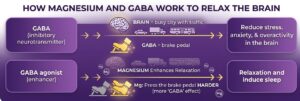
Magnesium acts as an agonist (enhancer) of Gamma-aminobutyric acid (GABA), a calming neurotransmitter that reduces brain activity and encourages relaxation.
A clinical study demonstrated that magnesium supplementation can improve sleep efficiency by up to 13%.
2. Regulates the Circadian Rhythm
Magnesium supports a healthy, balanced sleep-wake cycle by:
Increasing Melatonin Production: Melatonin is your body’s natural sleep hormone. As evening approaches and light fades, melatonin levels rise, signaling to your body that it is time to rest.
Lowering Cortisol Levels: It helps suppress excessive cortisol—the stress hormone that can keep your mind racing at night.
Have you ever heard that eating bananas or drinking warm milk before bed helps you sleep better? The secret lies largely in their natural magnesium content. Without adequate magnesium, your internal body clock can fall out of sync, making it difficult to fall asleep, stay asleep, or wake up feeling restored.
3. Reduces Stress and Anxiety
Magnesium glycinate is a widely recommended form of magnesium supplement that pairs elemental magnesium with glycine—an amino acid recognized for its calming properties. This combination promotes both mental relaxation and physical ease, making it particularly beneficial for individuals experiencing insomnia related to stress or anxiety.
Taking the Next Step Towards Better Rest
If you are struggling with insomnia or restless nights, evaluating your magnesium intake through diet or targeted supplementation can be a simple yet effective step toward achieving quality sleep.
Learn More: Discover more about the health benefits of Magnesium here.
Disclaimer: The information provided is for general knowledge and informational purposes only and should not be considered as medical advice or a substitute for professional consultation, diagnosis, or treatment. Always seek the advice of a qualified healthcare provider with any questions regarding a medical condition.
Reference
Luo, X., Tang, M., Wei, X., & Peng, Y. (2024). Association between magnesium deficiency score and sleep quality in adults: A population-based cross-sectional study. Journal of Affective Disorders, 358, 105–112. https://doi.org/10.1016/j.jad.2024.05.002
Abbasi, B., Kimiagar, M., Sadeghniiat, K., Shirazi, M. M., Hedayati, M., & Rashidkhani, B. (2012). The effect of magnesium supplementation on primary insomnia in elderly: A double-blind placebo-controlled clinical trial. Journal of Research in Medical Sciences, 17(12), 1161–1169.
Hornyak, M., Voderholzer, U., Hohagen, F., Berger, M., & Riemann, D. (1998). Magnesium therapy for periodic leg movements-related insomnia and restless legs syndrome: An open pilot study. Sleep, 21(5), 501–505.
Schwalfenberg, G. K., & Genuis, S. J. (2017). The importance of magnesium in clinical healthcare. Scientifica, 2017, 4179326. https://doi.org/10.1155/2017/4179326
Mitmesser, S. H. (2019). Micronutrient inadequacy in short sleep: Analysis of the NHANES 2005−2016. Nutrients, 11(10), 2335. https://doi.org/10.3390/nu11102335
Derom, M. L., Sayón-Orea, C., Martínez-Ortega, J. M., & Martínez-González, M. A. (2013). Magnesium and depression: A systematic review. Nutritional Neuroscience, 16(5), 191–206. https://doi.org/10.1179/1476830512Y.0000000044
Nechifor, M. (2009). Magnesium in major depression. Magnesium Research, 22(3), 163S–166S.
Tachikawa, M., & Hosoya, K. (2011). Transport characteristics of guanidino compounds at the blood-brain barrier and blood-cerebrospinal fluid barrier: Relevance to neural disorders. Fluids and Barriers of the CNS, 8, 13. https://doi.org/10.1186/2045-8118-8-13