
The Definitive Guide to Protein Powder: Types, Benefits, and How to Choose the Right One for Your Goals
When it comes to building muscle or a diet that complements exercise, protein powder is no stranger to gym rats and health enthusiasts. With more people participating in sports since the pandemic and gyms becoming more popular1, the increasing spotlight on protein intake and protein powder would not be surprising.
So why is protein powder so popular, and why are people confused? For starters, it is not a magic bullet, but instead, if attuned to health goals and used correctly, it would serve as a powerful tool in helping you achieve desired health goals.
This guide provides a complete breakdown of animal and plant proteins and their specific applications, offering simple instructions on how to select the best one for your diet, goals, and digestion.
Types of Protein
Protein is available in many different food sources and is not limited only to animal sources. There are a total of 20 different amino acids that our body uses, half of which our body can synthesize. However, there are 9 amino acids that our body is unable to synthesize. These amino acids are more commonly known as essential amino acids and can only be obtained through the food we eat. Below are the most prevalent and well-studied protein types, spanning from dairy-derived animal proteins to plant-based options ideal for vegans.
1. Whey Protein
Whey protein is the superstar of protein powders. It’s what most people picture when they think “protein supplement.”
But what exactly is whey? It’s the liquid that separates from milk during cheesemaking. While casein makes up 80% of cow’s milk protein, whey accounts for the remaining 20%.2
Like all animal proteins, whey is a complete protein, containing all nine essential amino acids your body needs to build muscle and support vital functions. What makes whey special is its high concentration of branched-chain amino acids (BCAAs)—leucine, isoleucine, and valine—which are particularly effective at building muscle and reducing muscle wasting.
Whey is a fast-acting protein, meaning it digests quickly and floods your bloodstream with amino acids rapidly (unlike casein, which releases more slowly).3 Plus, it’s naturally low in lactose, making it easier on your stomach.
There are 3 types of whey protein:
-
Whey Concentrate: The most affordable and minimally processed option, whey concentrate retains higher levels of carbohydrates and fats compared to other whey forms. Its protein content varies widely, from 35% to 80%. Since lactose is its primary carbohydrate, it may cause digestive issues for those who are lactose intolerant.
-
Whey Isolate: Through additional processing, whey isolate achieves a protein concentration of approximately 90%, with significantly reduced carbohydrate and fat content. This makes it ideal for individuals following more restrictive dietary plans.
-
Whey Hydrolysate: This form undergoes enzymatic hydrolysis, which pre-digests the protein into smaller fragments. While it’s the most expensive whey option, it’s also the easiest to digest, making it particularly beneficial for people with digestive sensitivities since the proteins are already partially broken down.
2. Casein Protein
What about casein, the protein that makes up the other 80% of milk? Like whey, casein is a complete protein containing all 9 essential amino acids.
The key difference lies in digestion speed. Casein is absorbed much more slowly than whey, likely because it interacts with stomach acid, leading to the clotting of the casein and slowing the digestion process.4
This slow-release effect means casein delivers a steady stream of amino acids to your body over an extended period. That’s why it’s often recommended as a nighttime protein—giving your muscles a sustained supply of amino acids for recovery and growth while you sleep.5
When it comes to post-workout muscle building, the research is mixed. Some studies suggest casein and whey are equally effective, while others give whey the edge.6,7
What’s clear, though, is that both milk proteins deliver all the essential amino acids your body requires.
3. Vegan Protein
Vegetarians and vegans aren’t missing out. There’s an abundance of plant-based protein powder options available for those who can’t consume dairy or simply prefer plant-derived alternatives. Here are some of the dairy-free proteins available in the market:
- Pea protein: Derived from yellow and green split peas (20-25% protein content), pea protein is a complete plant-based source featuring all 9 essential amino acids, high levels of arginine, and a great source of BCAAs.7 Studies have shown it to be as effective as dairy proteins for building muscle.8,9,10
- Brown rice protein: Brown rice protein has recently gained some traction as another plant-based protein powder option. It is derived from whole-grain brown rice, which is then ground, and the protein is separated from the carbohydrates to yield the protein powder. Although brown rice protein is not widely considered to be a complete protein source (i.e., containing all 9 essential amino acids), a study found that some brown rice protein powder products do, in fact, contain complete proteins, although at a lesser quantity compared to dairy protein powders like whey.11
- Soy protein: Soy protein is the most popular plant-based option. It is produced by dehulling soybeans, removing their oils, and extracting the protein. Soybeans contain approximately 36% protein and can be found in familiar foods like tofu and tempeh. As a complete protein source containing all nine essential amino acids,12 it’s a go-to choice for vegans. Beyond muscle support, soy protein also offers cardiovascular benefits, including lowering blood pressure and cholesterol levels.12
- Hemp protein: Hemp protein follows a similar production process to soy. Hemp seeds are pressed to extract their oils, then ground into powder. It naturally contains about 30% oil and 25% protein. The resulting protein powder is complete, with notably high levels of arginine but lower amounts of lysine and tryptophan.13. Arginine serves as a building block for nitric oxide, which promotes blood flow by dilating blood vessels. Because hemp protein production involves minimal processing, the final powder retains some beneficial oils rich in polyunsaturated fatty acids, including omega-3 and omega-6. 14
4. Other Specialized Proteins
A. Egg White Protein (Albumen)
Egg white protein powder, as the name suggests, is made using only the whites of the egg. As a result, it is naturally lower in fat and cholesterol content, which is often found in egg yolks instead. This powder is an excellent choice for people who have allergies to dairy or certain plant-based proteins. While it has not been quite as extensively studied as some other options, many find it to be more palatable since its taste is easier to mask.
B. Collagen Protein (Peptides)
Collagen is the predominant protein in skin, cartilage, hair, and connective tissues throughout the body. Unlike other protein powders, collagen is composed primarily of three amino acids such as glycine, proline, and hydroxyproline—all of which your body naturally synthesizes.
Fibroblasts, the cells responsible for collagen production, gradually lose efficiency with age, leading to decreased collagen output. This is where collagen supplementation may help. Marketed extensively for skin and joint health, these products have research support: studies demonstrate improvements in skin elasticity and hydration, as well as positive effects on joint health for individuals with osteoarthritis.15,16
Unlike the other protein sources, collagen is not a primary muscle-building protein due to the lack of essential amino acids. Therefore, for those looking to get extra protein to build muscles, other protein sources are likely to be better choices than collagen.
What is the difference between plant-based and animal-based protein?
Animal and plant proteins differ primarily in their amino acid profiles. Animal proteins typically contain all nine essential amino acids, earning them the designation of “complete proteins.” While some plant proteins are also complete, many individual plant sources are deficient in or contain lower amounts of certain essential amino acids. This is why plant-based protein blends—combining multiple plant sources—are beneficial, enabling vegetarians and vegans to obtain a full spectrum of essential amino acids.
How to Choose the Best Protein Powder for You?
With so many options available, it can be overwhelming for those getting into protein powders. Here is a simple starting guide to choosing the best protein powder.
1. Determine Your Goal
A) Muscle Building/Recovery: Whey isolate/concentrate (fast) or a high-quality vegan blend
If you’re aiming to build muscle or enhance post-workout recovery, prioritize proteins high in BCAAs—such as whey or a quality vegan blend.
Whey comes in two primary forms: isolate and concentrate. Isolate undergoes additional processing to reduce fat and carbohydrate content while boosting protein concentration per serving compared to concentrate.
For plant-based alternatives, vegan blends—combinations of different plant proteins—have demonstrated muscle-building results comparable to whey. Blends are often preferred over single-source plant proteins because individual plant sources typically have less optimal amino acid profiles. By combining multiple plant proteins with complementary amino acids, blends overcome this limitation.
B) Weight Loss/Satiety: Casein or Pea Protein (for fullness)
Protein powder can be a valuable tool for weight loss. Since protein is more filling than fats or carbohydrates, it helps reduce hunger frequency and overall calorie consumption.
Several mechanisms explain protein’s satiating effect. Protein increases levels of satiety hormones and boosts energy expenditure. Specifically, protein intake elevates concentrations of appetite-suppressing hormones like GLP-1, cholecystokinin (CCK), and peptide YY (PYY). Additionally, the thermic effect of protein (the energy required to digest, absorb, and metabolize protein) accounts for 20-35% of calories consumed, significantly higher than carbohydrates at 5-15%.
Casein and pea protein are particularly effective choices for weight management. Both have been shown to increase satiety and substantially reduce food intake. While the exact mechanisms aren’t fully understood, researchers suggest these proteins may slow gastric emptying and influence satiety-regulating hormones.
C) Lactose Intolerance/Dairy Allergy: Whey Isolate (low-lactose) or any plant-based option (pea, rice, or soy)
For individuals with lactose intolerance, whey isolate is a suitable option—its additional processing significantly reduces lactose content compared to whey concentrate.
Alternatively, plant-based proteins work well not only for those with lactose intolerance but also for people with dairy allergies. Rice protein offers an added advantage: it’s hypoallergenic, making it an excellent choice for those managing multiple food allergies.
D) Pre-Bedtime: Casein
If you’re looking to boost protein intake before bed, casein is your ideal choice.
Thanks to its slow absorption rate, casein provides a prolonged, steady release of amino acids throughout the night, fueling your body’s recovery and rebuilding processes while you sleep.
E) Joint/Skin Health: Collagen Peptides
For joint and skin support, collagen protein is worth considering.
Keep in mind that age-related collagen loss is inevitable. However, when combined with a healthy lifestyle and balanced diet, collagen supplementation can help slow the rate of decline.
3. Build muscle, not debt: Check cost per gram
Ultimately, protein powder prices vary based on brand, package size, promotions, actual protein per serving, and other factors. To make an informed purchasing decision, calculate the cost per gram of protein rather than focusing solely on the total price.
The cheapest option with the full package of essential amino acids would be whey concentrate and pea protein, followed by soy protein. For those able to fork out a little more, good options would include whey isolate and casein. And for those with the purchasing power, whey hydrolysate provides the fastest solution for protein replenishment. Additionally, dietary restrictions and preferences should be considered along with the value of each protein powder.
Conclusion: Making the Final Scoop Count
With so many protein powder options available, we’ve created a quick reference table to help you compare them at a glance.
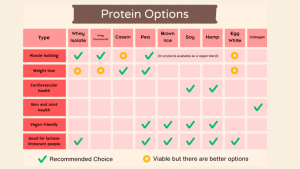
Remember, protein powder is exactly what it claims to be: a supplement. It delivers the best results when paired with a consistent diet and regular exercise routine. The key is finding one you’ll actually consume, whether that means choosing a flavor you love, selecting one that aligns with your health goals, or simply picking an option that fits seamlessly into your lifestyle. Consistency matters more than perfection.